

Mission-driven developer clothing is apparel designed around authentic technical identity, sustainability, and the real values of the developer community. It goes far beyond slapping a keyboard icon on a hoodie. This category, sometimes called “infrawear” in tech fashion circles, encodes genuine technical references like subnet masks, OSI model layers, and binary strings directly into designs. Devhero builds exactly this kind of clothing, combining carbon-neutral shipping with over 80 million carbon-neutral orders fulfilled and 56 thousand tonnes of carbon removed through verified projects. If you have ever wanted your wardrobe to actually speak your language, this is where to start.
What is mission-driven developer clothing, exactly?
Mission-driven developer clothing is purpose-driven attire built on three pillars: technical authenticity, environmental responsibility, and community belonging. The industry term for the technical identity side of this category is “infrawear,” a clothing segment built specifically for IT professionals that uses visually encoded technical references only a technically literate audience can decode.
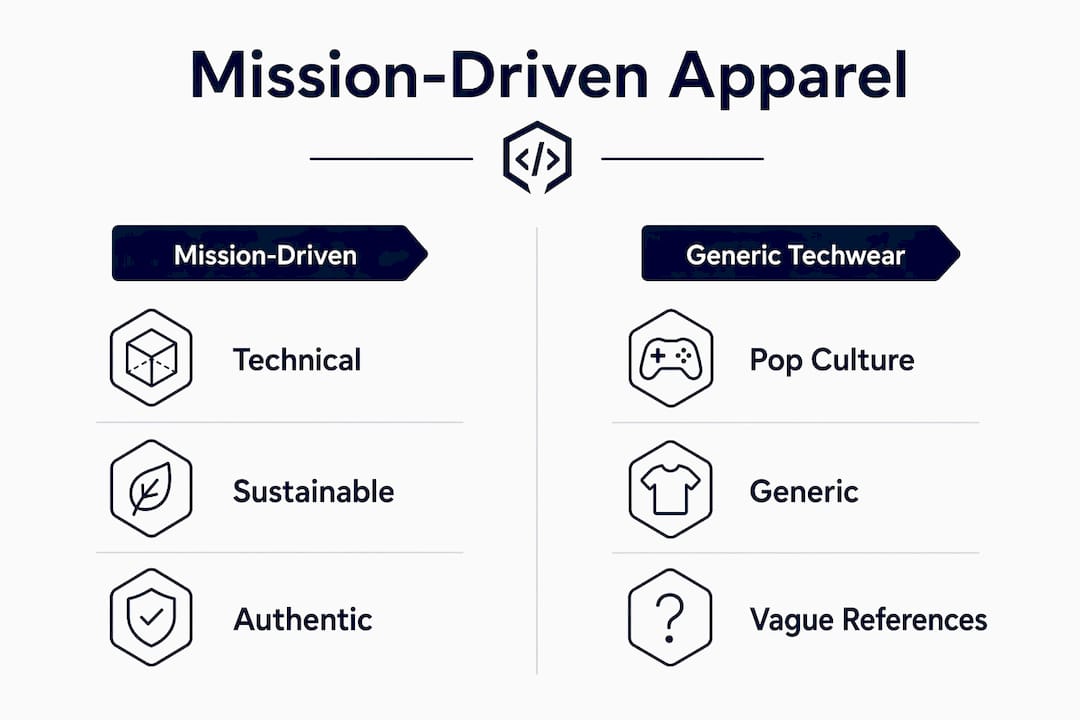
This is a sharp departure from generic geekwear. Generic tech apparel leans on pop culture references or vague “I code” slogans. Mission-driven fashion, by contrast, commits to accuracy. A design featuring a /32 subnet mask is not decorative. It communicates a specific networking concept, and developers who recognize it feel an immediate sense of peer recognition.
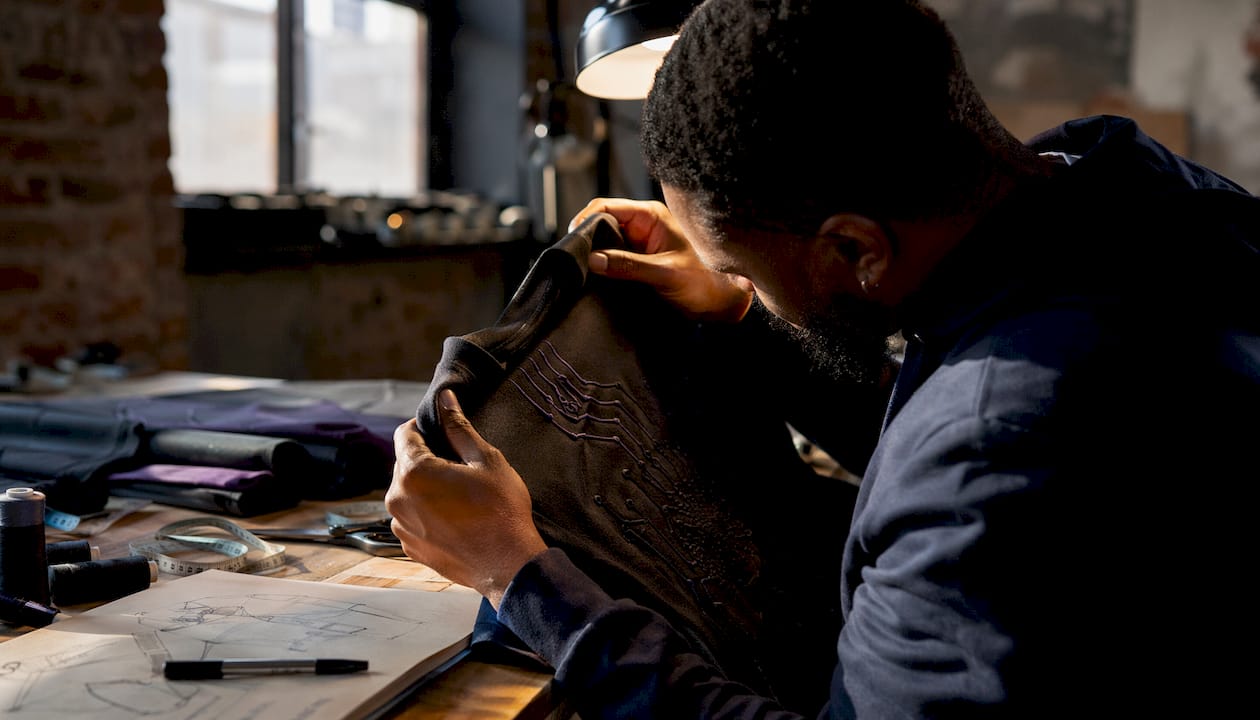
The “mission” part covers more than aesthetics. Mission-driven companies integrate their purpose into operations and product design, not just marketing copy. For developer apparel, that means using sustainable materials, maintaining ethical supply chains, and building community feedback into the design process. The clothing becomes a statement about who you are and what you stand for, both professionally and environmentally.
What makes developer clothing truly mission-driven?
Several specific elements separate mission-driven developer apparel from standard tech merchandise. Here is what to look for:
- Technical accuracy in design. Every element, whether binary code, CIDR notation, or protocol names, must decode correctly. Technical errors in design destroy community trust instantly. Authentic brands verify every design before production.
- Sustainability commitments with real targets. Look for brands using recycled or regenerated fibers, carbon-neutral shipping, and published environmental goals, not just a green logo.
- Community feedback loops. Mission-driven brands build designs with input from actual developers, not marketing teams guessing what coders like.
- Ethical production. Values-based developer wear traces its supply chain and publishes that information. Transparency is the standard, not a bonus feature.
- Purpose over profit as a stated operating principle. The brand’s mission shapes product decisions, not the other way around.
You can also find purpose-driven attire in adjacent technical communities. STEM-focused apparel follows a similar philosophy, using clothing to signal professional identity and shared values within technical fields.
Pro Tip: When evaluating a developer clothing brand, check whether the technical elements on their designs actually work. Decode the binary. Verify the subnet math. If the brand got it wrong, the mission is marketing, not substance.
The contrast with traditional techwear is worth spelling out. Traditional techwear prioritizes function, weather resistance, and urban mobility. Generic geekwear prioritizes humor or nostalgia. Mission-driven developer clothing prioritizes meaning. It sits at the intersection of expressing code through fashion and making a real environmental commitment with every purchase.
How do sustainability innovations shape developer apparel?
Sustainability in mission-driven developer clothing is not a marketing badge. It is a production philosophy backed by specific material choices and measurable goals.
The most significant material innovation right now is regenerated fiber. Brands committed to circularity use fibers like Nucycl, which can be recycled up to five times, reducing dependence on virgin cotton and conventional polyester. Both traditional materials carry heavy environmental costs in water use, chemical processing, and carbon output. Regenerated fibers cut those costs significantly across the product lifecycle.
The industry’s published targets reflect how serious this shift is. Leading sustainable developer apparel brands commit to full textile recyclability by 2030 and a net-neutral carbon footprint by 2050. Those are not aspirational slogans. They are operational targets that require specific material sourcing, production methods, and logistics decisions today.
| Sustainability feature | What it means in practice |
|---|---|
| Regenerated fibers (e.g., Nucycl) | Fabric recycled up to five times, reducing raw material demand |
| Carbon-neutral shipping | Emissions from delivery offset through verified environmental projects |
| Textile recyclability goal by 2030 | Brand commits to full circular production within this decade |
| Net-neutral footprint target by 2050 | Long-term commitment to zero net environmental impact |
| Supply chain transparency | Consumers can verify sustainability claims, not just trust marketing |
Digital technology plays a growing role in making these commitments verifiable. Blockchain and IoT tools improve traceability across the supply chain, letting developers verify that a brand’s sustainability claims hold up beyond the hang tag. That matters because greenwashing is common in fashion. Technology makes it harder to fake.
Pro Tip: Ask any developer apparel brand for their supply chain transparency report before buying. Brands with genuine sustainability commitments publish this information. Brands without it rely on you not asking.
CAD, AR/VR, and AI tools are also reshaping how sustainable developer garments are designed. Virtual prototyping reduces physical sample waste. Digital platforms create a single source of truth for design and production data, cutting errors and overproduction. These are not future technologies. They are active in production pipelines at brands serious about reducing their environmental footprint.
How does adaptive design reduce waste in developer clothing?
Adaptive design is one of the most practical tools mission-driven developer apparel uses to fight overconsumption. The concept is straightforward: one garment offers multiple fits, styles, or configurations, so developers buy less and wear more.
Adaptive garments shift in fit, color, and style on demand to support slow fashion goals. A single piece that works as a layering item, a standalone top, or a different silhouette depending on how it is worn extends the useful life of the garment significantly. That directly reduces the volume of clothing that ends up in landfills.
The benefits of adaptive design for conscious developers include:
- Longer garment lifespan. One piece replaces several single-purpose items, reducing total consumption.
- Lower cost per wear. A garment worn 200 times costs far less per use than one worn 10 times.
- Reduced closet volume. Fewer, better pieces align with the minimalist mindset many developers already apply to their code.
- Support for slow fashion. Buying less but wearing more is the core principle of sustainable consumption, and adaptive design makes it practical.
DIY and transformable fashion approaches extend this philosophy further, giving developers tools to modify and extend the life of garments they already own. The developer wellness movement in apparel connects adaptive design directly to the idea that clothing should support your life, not complicate it.
Shape-shifting textiles represent the frontier of this category. These fabrics change properties based on temperature, movement, or configuration, offering genuine functional versatility. For developers who spend long hours at a desk and then move to a standing meeting or a commute, that adaptability has real daily value.
How does mission-driven clothing build developer community identity?
Developer clothing that encodes real technical knowledge functions as a visual language. It creates instant recognition between people who share the same professional world.
- Infrawear signals professional credibility. A design featuring OSI model layers or CIDR notation tells other developers something real about the wearer’s background. It is a credential worn, not stated.
- Technical accuracy builds respect. Every design element must verify correctly, from binary strings that decode to actual words to subnet masks that reflect real network configurations. Accuracy is what separates infrawear from costume.
- Community feedback shapes future designs. Mission-driven brands collect input from developers actively. That loop produces designs that resonate because they come from the community, not from outside it.
- Shared symbolism creates belonging. When two developers recognize the same technical reference on a shirt, that moment of recognition builds connection. It is the same mechanism as a shared programming language or a favorite framework.
- Specialized identity matters in tech culture. Developers spend years building expertise. Clothing that reflects that expertise gives it a visible, wearable form. That is not vanity. It is professional pride expressed through what programmers wear every day.
The Devhero “HI ! I AM {{ name }}” design is a direct example. The template literal syntax on a t-shirt is immediately recognizable to developers and completely opaque to everyone else. That is infrawear working exactly as intended.
Key Takeaways
Mission-driven developer clothing combines verified technical accuracy, circular sustainability practices, and community-driven design to create apparel that genuinely represents the developer identity.
| Point | Details |
|---|---|
| Infrawear is the core concept | Clothing encodes real technical references that only technically literate developers can decode. |
| Sustainability requires specifics | Look for regenerated fibers, carbon-neutral shipping, and published recyclability targets, not just green branding. |
| Adaptive design reduces waste | Multi-fit garments extend product lifespan and support slow fashion by replacing several single-use pieces. |
| Technical accuracy builds trust | Every design element must verify correctly; errors destroy community credibility immediately. |
| Community identity is the outcome | Shared technical symbolism creates peer recognition and professional belonging within the developer community. |
Why this category matters more than most people realize
We have watched the developer community get handed generic tech merch for years. Shirts with vague “code” references, hoodies with binary that does not decode to anything, laptop stickers that look technical but carry no real meaning. That gap between what developers actually know and what fashion offered them was always frustrating.
Mission-driven developer clothing closes that gap. When we design around real subnet masks and verified binary strings, we are not being pedantic. We are saying that your expertise deserves accurate representation. The technical community has always been underserved by fashion, and infrawear is the correction.
The sustainability side is equally non-negotiable for us. Developers think in systems. They understand that every decision has downstream consequences. Choosing clothing made from regenerated fibers, shipped carbon-neutrally, with a published path to full circularity by 2030 is a systems-level decision. It aligns with how developers already think about their work.
The future of this category belongs to brands that treat both accuracy and sustainability as hard requirements, not marketing options. Developers will keep demanding more, and that is exactly the right pressure to apply.
— Devhero
Devhero’s collection for developers who mean it
Devhero builds apparel where every design earns its place. Our developer clothing collection uses technically verified designs, organic cotton, recycled fibers, and carbon-neutral shipping on every order.
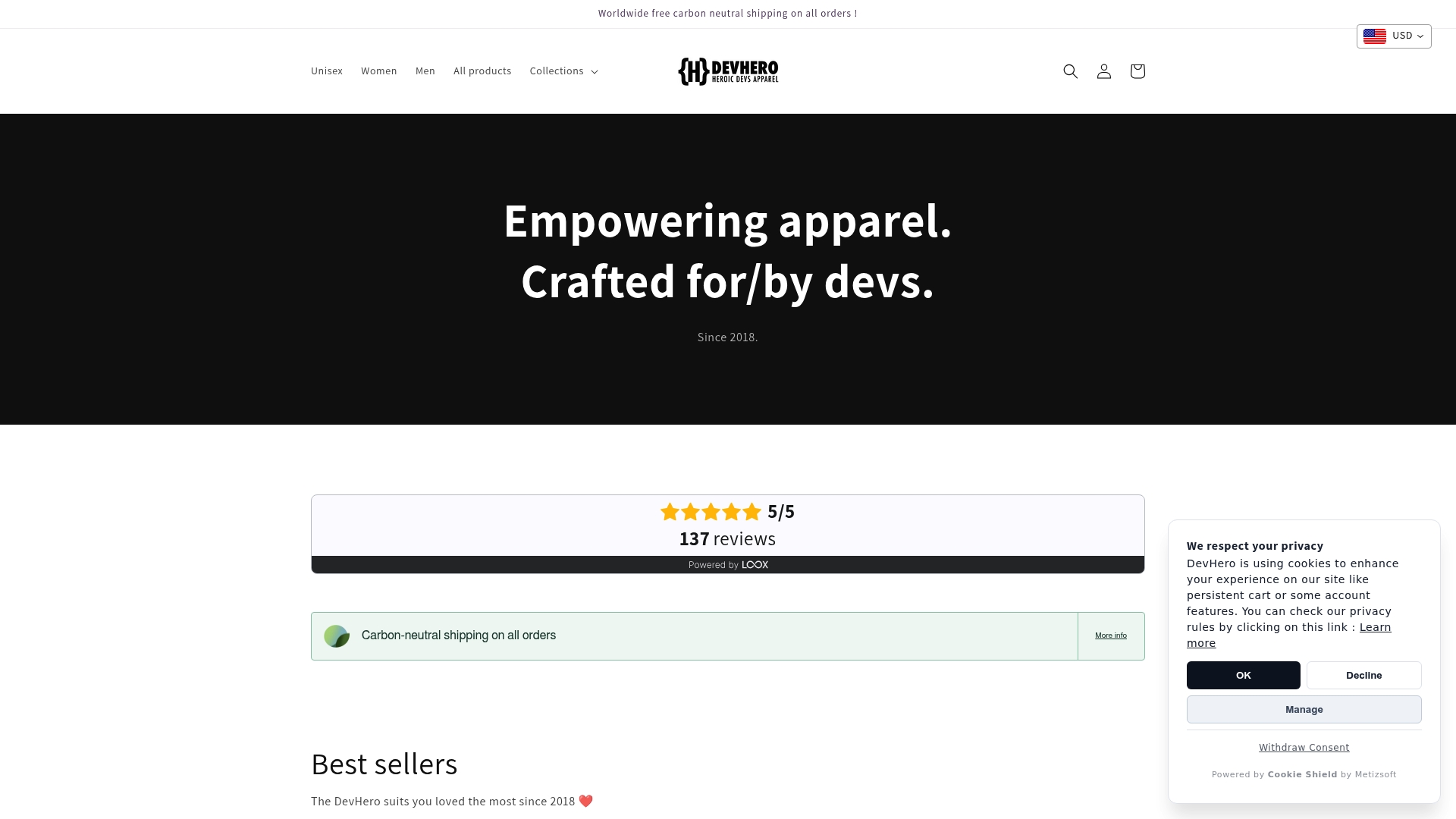
Every piece in our catalog goes through technical review before production. Binary decodes. Subnet math checks out. Protocol references are accurate. We also back every purchase with real environmental impact: 56 thousand tonnes of carbon removed through verified projects and counting. Whether you want a clean coder organic tee or a recycled crop top that fits your workflow, Devhero has something built for the way you actually work and what you actually stand for.
FAQ
What is infrawear in developer clothing?
Infrawear is a clothing category designed specifically for IT professionals, using technically accurate references like subnet masks, OSI layers, and binary strings in designs. Only technically literate developers can fully decode the symbolism, which creates peer recognition and professional identity.
How do I choose ethical developer clothing?
Look for brands that publish their material sourcing, use regenerated or recycled fibers, offer carbon-neutral shipping, and verify the technical accuracy of their designs before production. Transparency in the supply chain is the clearest signal of genuine commitment.
What sustainability materials appear in mission-driven developer apparel?
Regenerated fibers like Nucycl are the leading material innovation, offering recyclability up to five times and reducing reliance on virgin cotton and polyester. Organic cotton and post-consumer recycled fabrics are also common in values-based developer wear.
Why does technical accuracy matter in developer clothing design?
Technical errors in design, such as binary that decodes to nonsense or incorrect subnet math, undermine community trust immediately. Accurate designs signal that the brand understands the developer community from the inside, not just from the outside looking in.
What is the difference between mission-driven fashion and generic tech merch?
Generic tech merch uses broad pop culture references or vague coding themes with no technical depth. Mission-driven fashion integrates verified technical symbolism, sustainable production practices, and community-driven design into every garment, making each piece a genuine expression of developer identity and values.