

A developer motto on apparel is a concise slogan or phrase printed on clothing that captures the mindset, humor, or values of software development culture. These phrases go far beyond decoration. They function as identity markers, conversation starters, and cultural signals within the tech community. Slogans like “Deploy First Fix Later,” “It Works on My Machine,” and “Me++” appear on T-shirts and hoodies worn at hackathons, coding meetups, and casual tech offices worldwide. Devhero has built an entire developer apparel philosophy around this idea, turning code culture into wearable self-expression.
What is developer motto on apparel and what do popular slogans mean?
Developer mottos on apparel are short phrases that encode shared experiences, values, and inside jokes from the world of software engineering. They communicate something real about what it feels like to write code for a living. The best ones land instantly with other developers and require zero explanation for the uninitiated.
Apparel slogans for developers fall into three broad categories: humorous, motivational, and philosophical. Humorous slogans poke fun at the absurdities of coding life. Motivational ones reinforce positive habits and mindsets. Philosophical slogans reflect deeper values about craft, problem-solving, and continuous growth.
Here are seven popular developer mottos and what they actually mean:
- “It Works on My Machine” — The universal developer excuse. It captures the frustration of environment-specific bugs and doubles as a badge of solidarity among anyone who has ever shipped code.
- “Deploy First Fix Later” — A tongue-in-cheek nod to move-fast culture. It reflects the tension between shipping speed and code quality that every developer knows well.
- “Me++” — A programming increment operator applied to personal growth. Slogans like “Me++” symbolize continuous learning and self-improvement, which are core developer values.
- “Code Is Art” — A philosophical claim that writing clean, elegant code is a creative act, not just a technical one.
- “Debugging Is Like Being a Detective” — Captures the investigative, methodical nature of finding and fixing bugs. It reframes a frustrating task as a skill worth respecting.
- “Think First, Solve the Problem” — Experts highlight that slogans like “Think First” represent a cultural shift valuing problem definition over raw coding speed.
- “Clean Code Is Happy Code” — A motivational motto that promotes best practices. It reinforces the idea that readable, well-structured code benefits everyone on the team.
Pro Tip: The most resonant developer slogans use real programming syntax or concepts. A phrase like “Me++” lands harder than “Keep Learning” because it speaks the language of the audience directly.
How do developer apparel mottos shape culture and workplace identity?
Developer apparel mottos do real cultural work. They create instant recognition between strangers at a conference, signal shared values on a remote team’s video call, and reinforce a sense of belonging in an industry that can feel isolating.

Ironic developer mottos allow expression of shared technical frustrations and forge community solidarity. When a developer wears “It Works on My Machine,” they are not just making a joke. They are acknowledging a universal pain point in a way that says, “I get it, and so do you.” That shared recognition builds trust faster than most team-building exercises.
Apparel at hackathons and coding meetups influences team cohesion and morale. Wearing a slogan that reflects your values signals to others what kind of developer you are before you say a word. It is a form of non-verbal communication that the tech community has embraced naturally.
The developer wellness movement has added a new dimension to coding fashion statements. More developers now seek out apparel with positive, affirming slogans rather than purely ironic ones. This shift reflects a broader conversation about mental health, work-life balance, and sustainable productivity in tech. The slogans developers choose to wear increasingly reflect the kind of culture they want to build.
“The clothes developers choose to wear to work, meetups, or hackathons are a quiet but powerful statement about what they value, what they find funny, and who they feel they belong with.”
Key ways developer apparel mottos shape culture:
- They signal technical identity and experience level to peers.
- They create instant conversation starters at networking events.
- They reinforce team values when worn collectively at company events.
- They give voice to shared frustrations in a low-stakes, humorous way.
- They reflect the emerging developer wellness movement through positive messaging.
What is the history and evolution of developer mottos on clothing?
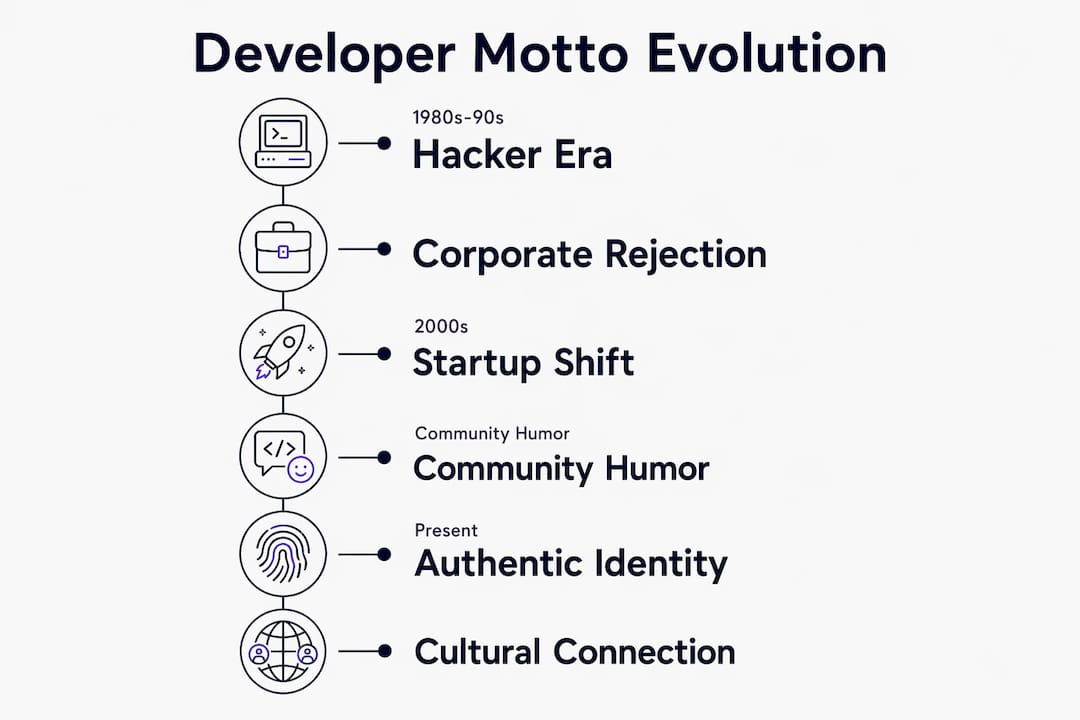
Developer mottos on clothing trace back to early hacker and tech culture, where slogans served as counter-culture statements rejecting corporate norms. The phrase FYIFV is one of the earliest documented examples. It originated among Microsoft employees and expressed financial independence and a candid rejection of workplace constraints. It was not fashion. It was a statement.
As tech culture moved from underground hacker circles into mainstream offices and startup culture, the slogans evolved too. The raw defiance of early mottos softened into irony and humor. Phrases borrowed from programming syntax, commit messages, and error logs became the new vocabulary of developer fashion. The developer mindset in clothing shifted from rebellion to identity celebration.
Niche brands began creating apparel using real code, git commit histories, and programming language syntax as design elements. Brands using real code and commit patterns succeed because experienced developers recognize the authenticity immediately. A T-shirt with a real git log printed on it means something entirely different from a generic “I Love Coding” shirt.
| Era | Iconic Slogan | Meaning |
|---|---|---|
| Early hacker culture (1980s–1990s) | FYIFV | Financial independence; rejection of corporate control |
| Dot-com era (late 1990s–2000s) | “There’s no place like 127.0.0.1” | Localhost as home; insider networking humor |
| Startup culture (2010s) | “Deploy First Fix Later” | Move-fast philosophy; shipping speed over perfection |
| Modern developer culture (2020s) | “Me++” | Continuous learning; personal growth as a developer value |
| Developer wellness era (2025–2026) | “Clean Code Is Happy Code” | Best practices; positive mindset and sustainable productivity |
The table shows a clear arc. Early mottos were defiant. Modern ones are reflective. The best current slogans blend technical authenticity with genuine values, which is exactly why they resonate so strongly with developers today. Understanding how branded apparel communicates identity helps explain why the print and placement of a slogan matters as much as the words themselves.
How can you choose or create a motto that reflects your developer identity?
Choosing a motto for your apparel starts with authenticity. A slogan that genuinely reflects your experience, values, or sense of humor will always land better than one you picked because it looked cool on someone else’s shirt.
Developers view their apparel as wearable trophies representing authentic technical identity. That means the best source of inspiration for your motto is your own coding life. Think about the phrases you actually say at work, the errors you have memorized, or the commit messages that made your team laugh.
Here is a practical process for finding or creating your motto:
- List your daily frustrations and wins. The most resonant slogans come from real experiences. “It Works on My Machine” stuck because every developer has lived it.
- Look at your commit history. Real commit messages often contain accidental poetry. “Fixed it for real this time” is funnier and more authentic than anything invented from scratch.
- Use programming syntax as a creative tool. Operators, conditionals, and function names translate into clever wordplay that only developers fully appreciate.
- Test it on a peer. If another developer smiles or nods immediately, the slogan works. If you have to explain it, simplify it.
- Balance humor and professionalism. A slogan that works at a hackathon may not work in a client meeting. Consider where you will wear the apparel most often.
Wearing your own motto builds confidence. It signals to peers that you know who you are as a developer. At networking events, a well-chosen slogan on a coding-themed tee opens conversations that a business card never could.
Pro Tip: Avoid slogans that punch down at non-technical people. The best developer mottos celebrate the craft without making outsiders feel excluded. Inclusive humor builds bigger communities.
Key Takeaways
Developer mottos on apparel are identity tools that communicate values, humor, and community belonging far more effectively than generic fashion choices.
| Point | Details |
|---|---|
| Mottos are identity markers | Slogans like “Me++” and “Deploy First Fix Later” signal developer values instantly to peers. |
| Culture and community | Apparel mottos build solidarity at hackathons, meetups, and tech offices by voicing shared experiences. |
| History shapes meaning | Developer slogans evolved from counter-culture defiance (FYIFV) to craft-celebrating and wellness-focused phrases. |
| Authenticity wins | The most resonant mottos use real programming syntax, commit language, or genuine developer humor. |
| Choose with purpose | Match your slogan to your values, your audience, and the context where you will wear it most. |
Why developer mottos matter more than most people realize
We have seen thousands of developers wear their identity on their sleeves, literally. What strikes us every time is how quickly a well-chosen slogan cuts through the noise at a crowded event. Two developers who have never met can share a laugh over “It Works on My Machine” and immediately feel like they are on the same team. That is not a small thing.
The mottos that stick are the ones that tell the truth. “Deploy First Fix Later” is funny because it is real. “Think First, Solve the Problem” resonates because it names something developers actually aspire to. The clothing becomes a mirror for the culture, and wearing it is a way of saying, “This is what I believe about the work.”
We also think the wellness shift in developer slogans is genuinely significant. The move from purely ironic mottos toward affirming ones like “Clean Code Is Happy Code” reflects a maturing community. Developers are increasingly aware that the culture they build around their work matters as much as the code they ship. Apparel is one of the most visible ways that culture gets expressed.
The future of developer mottos on clothing will get more personal. Real commit histories, personalized error messages, and language-specific syntax will replace generic phrases. The developers who wear something that is truly theirs will stand out in the best possible way.
— Devhero
Devhero’s apparel collection for developers who mean what they wear
At Devhero, we build apparel for developers who want their clothing to say something real. Every piece in our collection is designed around the mottos, values, and humor that actually define coding culture.
Our developer clothing collection includes designs like “Deploy First Fix Later,” “Code Is Art,” and the fan-favorite Coffee to Code Machine shirt. Each piece is crafted with care and shipped carbon-neutrally, backed by over 80 million carbon-neutral orders and 56 thousand tonnes of carbon removed through verified projects. When you wear Devhero, you are expressing your developer identity and making a choice that reflects your values beyond the screen. Browse the full software developer clothing range and find the motto that fits you best.
FAQ
What is a developer motto on apparel?
A developer motto on apparel is a short slogan or phrase printed on clothing that reflects the culture, humor, or values of software development. Common examples include “It Works on My Machine,” “Deploy First Fix Later,” and “Me++.”
Why do developers wear slogan apparel?
Developers wear slogan apparel to express their technical identity, signal shared values, and build community connections at events like hackathons and coding meetups. The slogans act as non-verbal communication tools within the tech community.
What makes a developer slogan authentic?
Authentic developer slogans use real programming syntax, commit language, or genuine insider humor that experienced coders recognize immediately. Brands that incorporate actual code patterns or technical references earn credibility with developer audiences.
How have developer apparel mottos changed over time?
Early developer mottos like FYIFV were counter-culture statements rejecting corporate norms. Modern slogans have shifted toward celebrating craft, continuous learning, and developer wellness, reflecting a more mature and community-focused tech culture.
Can wearing a developer motto improve workplace culture?
Apparel slogans influence team cohesion and morale, particularly at team events and hackathons. Positive mottos like “Clean Code Is Happy Code” reinforce best practices and contribute to the growing developer wellness movement.